
West Hill Residence
Under Construction
Stamford, CT
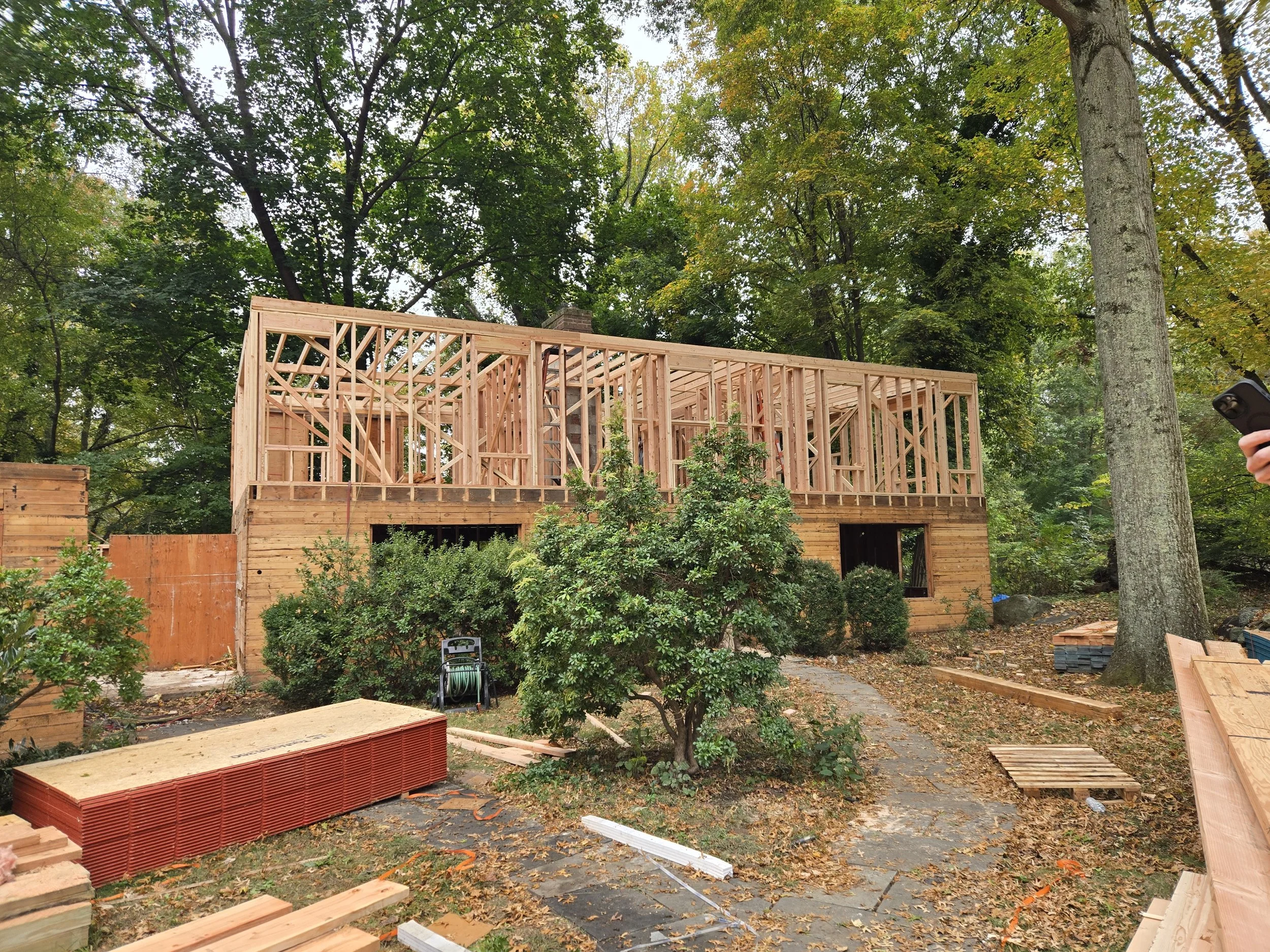
The West Hill Residence is a substantial retrofit and vertical enlargement of a single-family home that had undergone multiple additions over time. Years of incremental change had left the house fragmented in both plan and construction. The project involves a complete reorganization of the first floor and the construction of an entirely new second floor, with the goal of unifying the house into a coherent whole.
The work combines architectural reorganization with a comprehensive upgrade to the building envelope, improving comfort, durability, and energy performance while resolving the inconsistencies created by previous alterations.
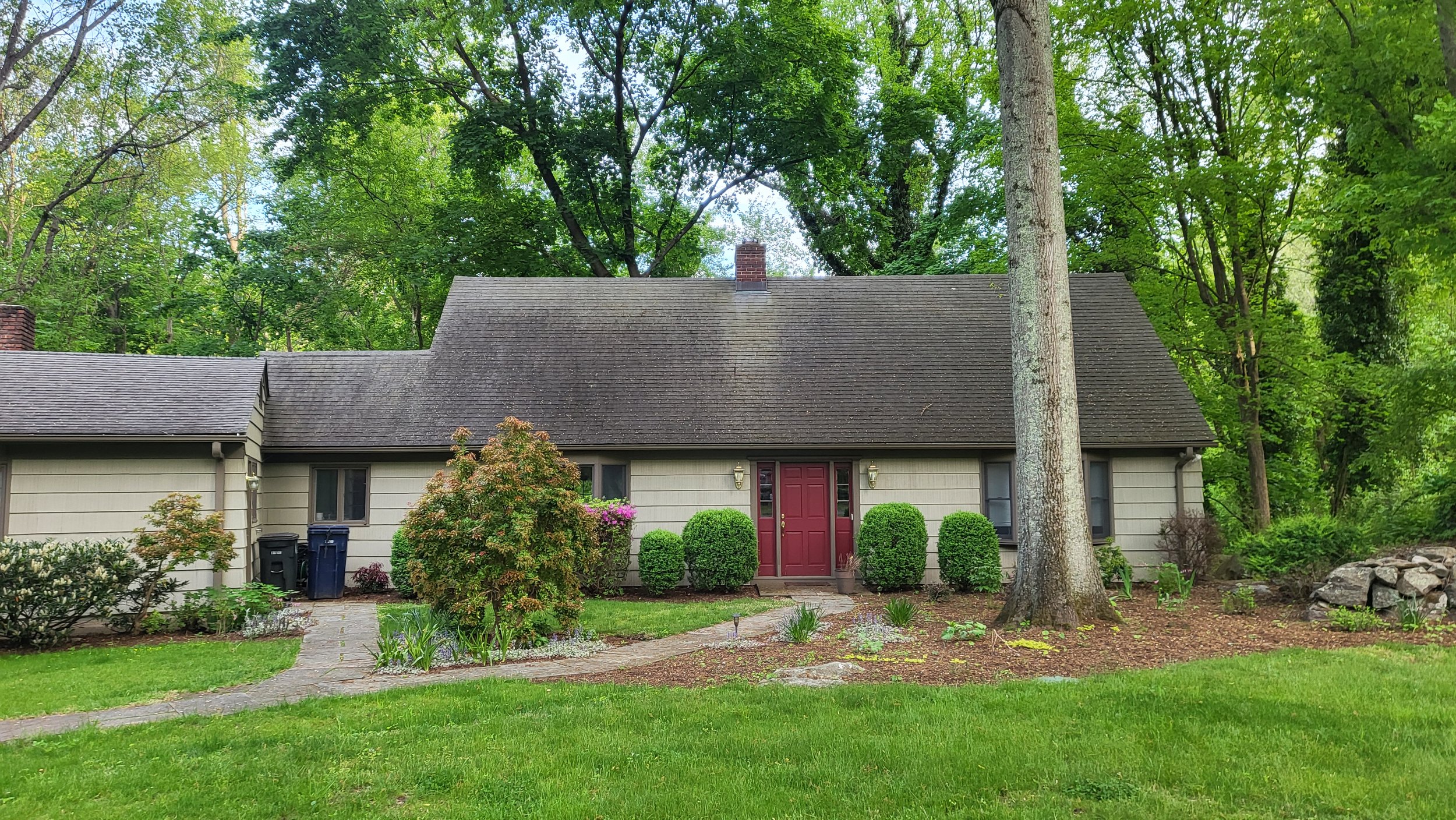
Existing Conditions
The front of the house reflects a Cape-style form, with a steeply sloped roof that strongly defines the facade. While characteristic of the type, the scale of the roof dominates the elevation, limiting the architectural presence of the house below. The project introduces a vertical enlargement that rebalances the facade and gives the elevation greater clarity and prominence.
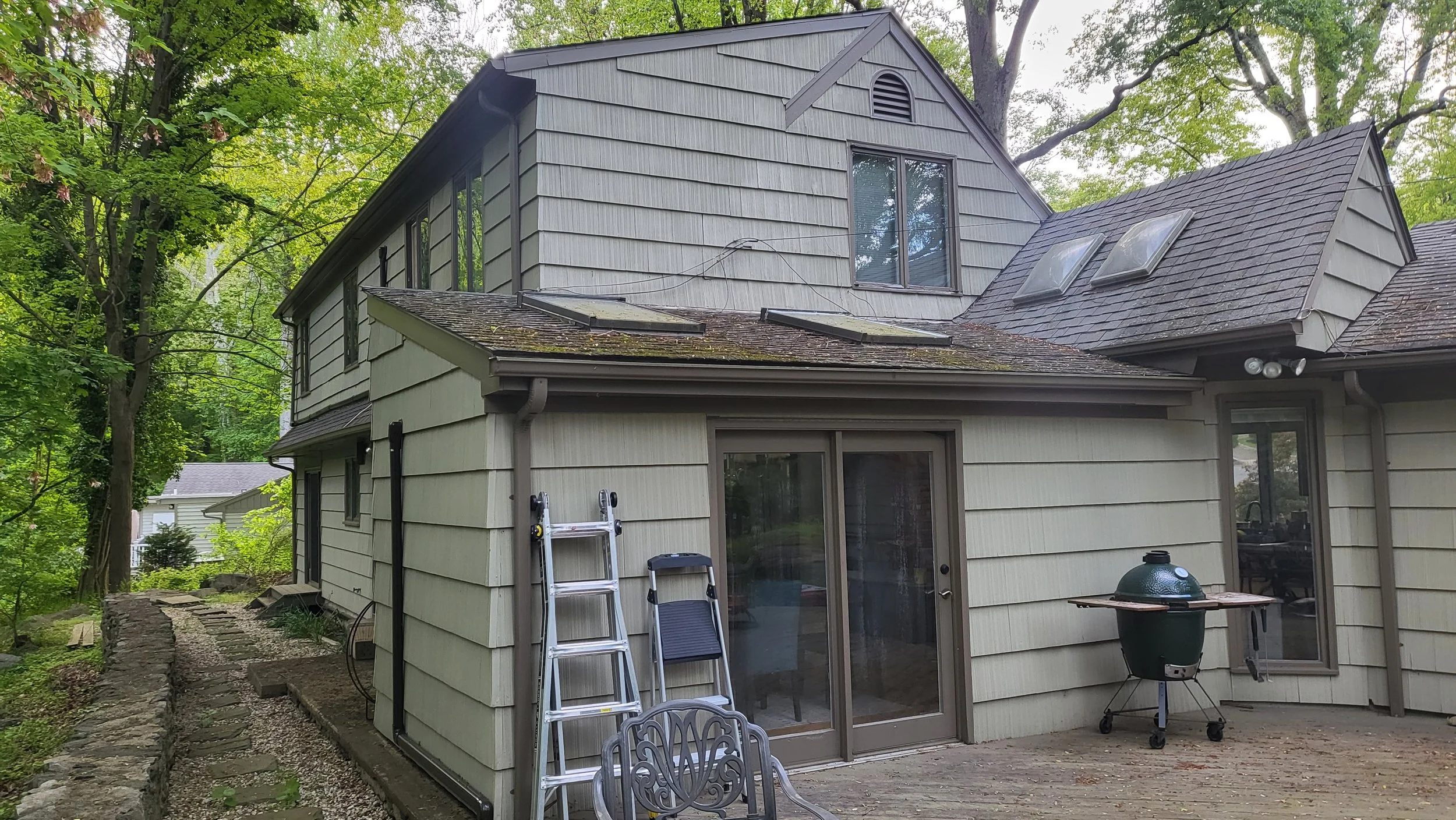
At the rear of the house, successive additions accumulated over time, producing overlapping rooflines, misaligned volumes, and varied construction approaches. The resulting condition lacked a clear organizational or massing logic, leaving the house to read as a series of independent elements rather than a unified whole.
Reconfiguration in Progress
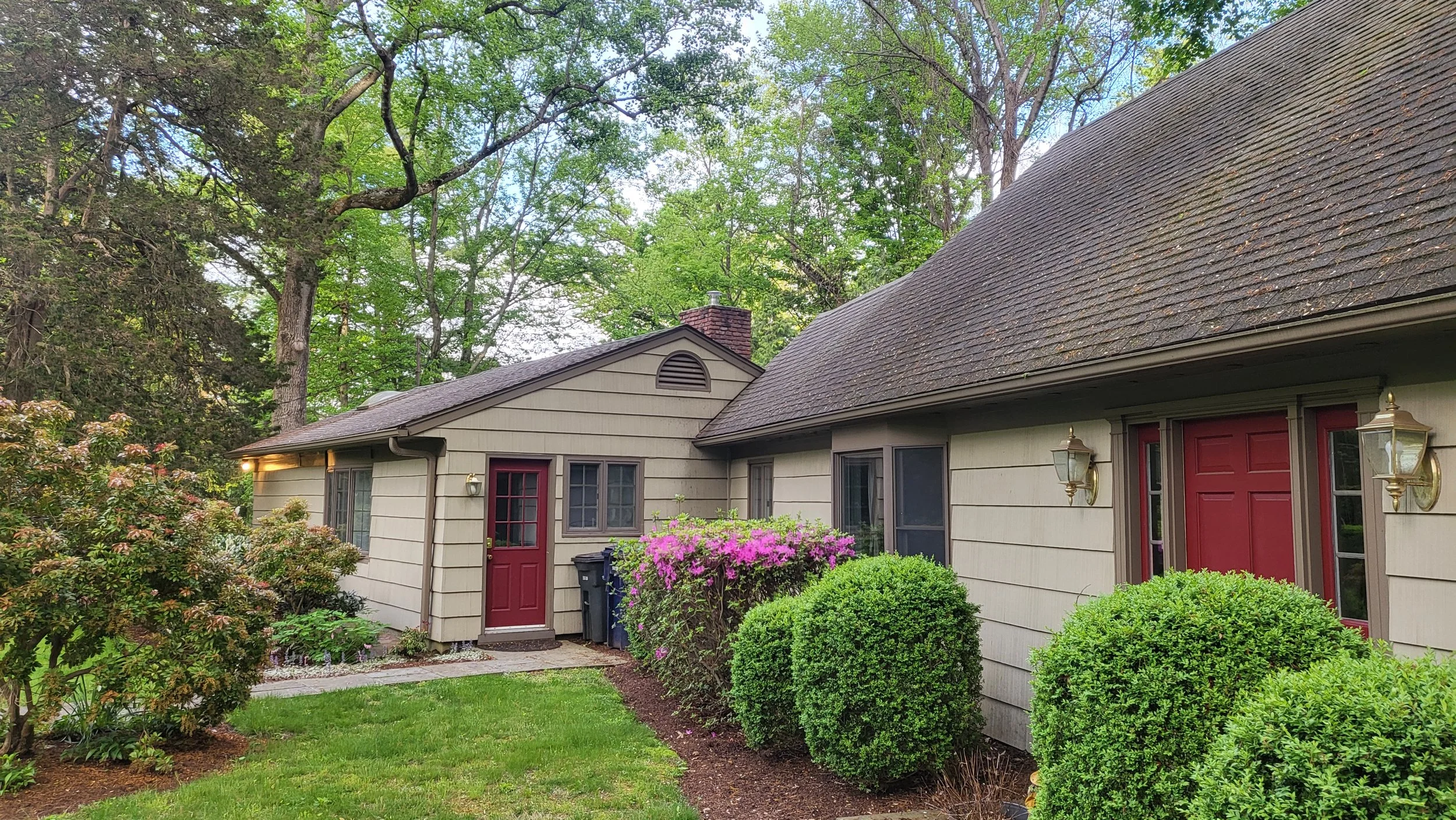
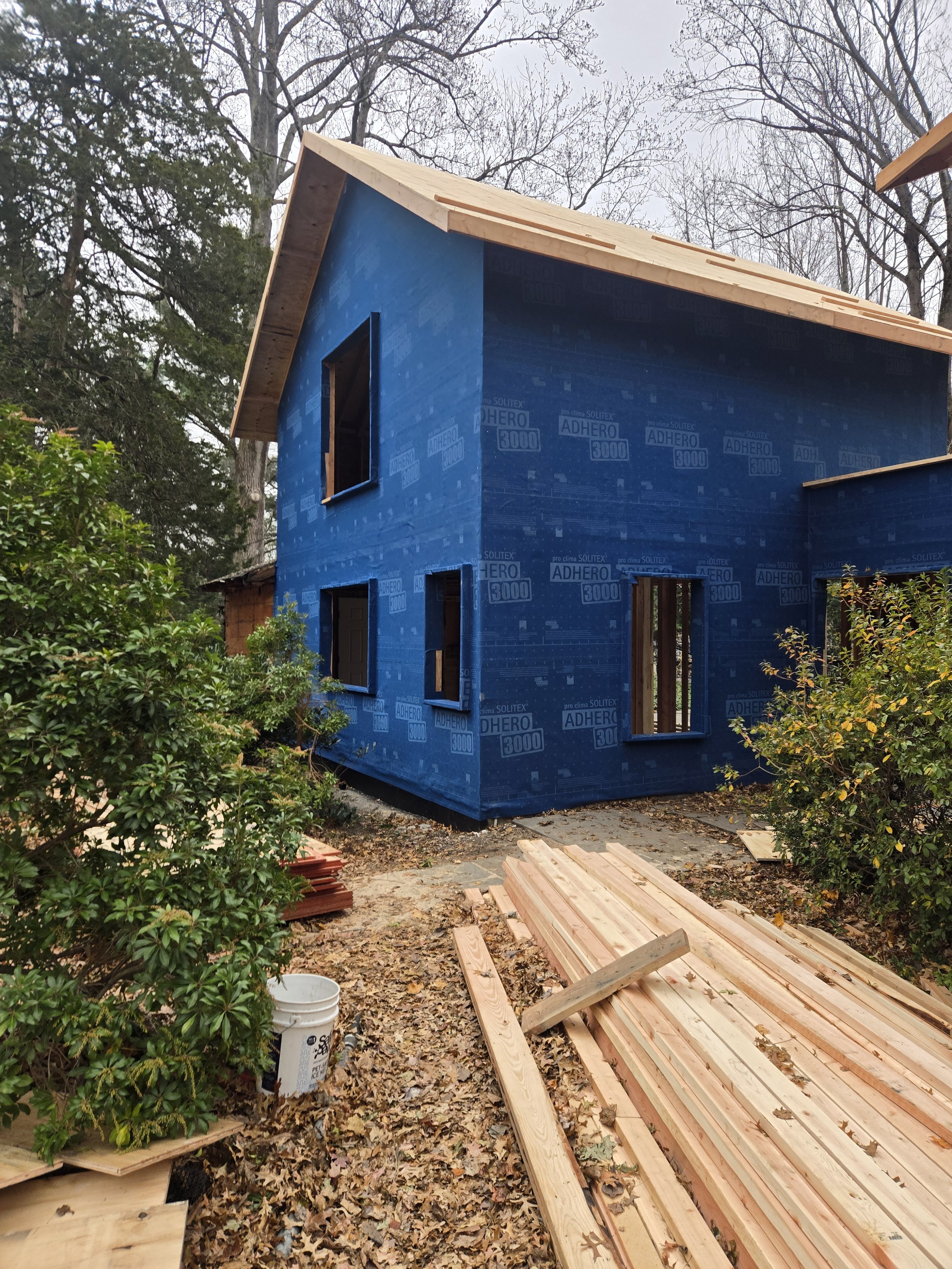
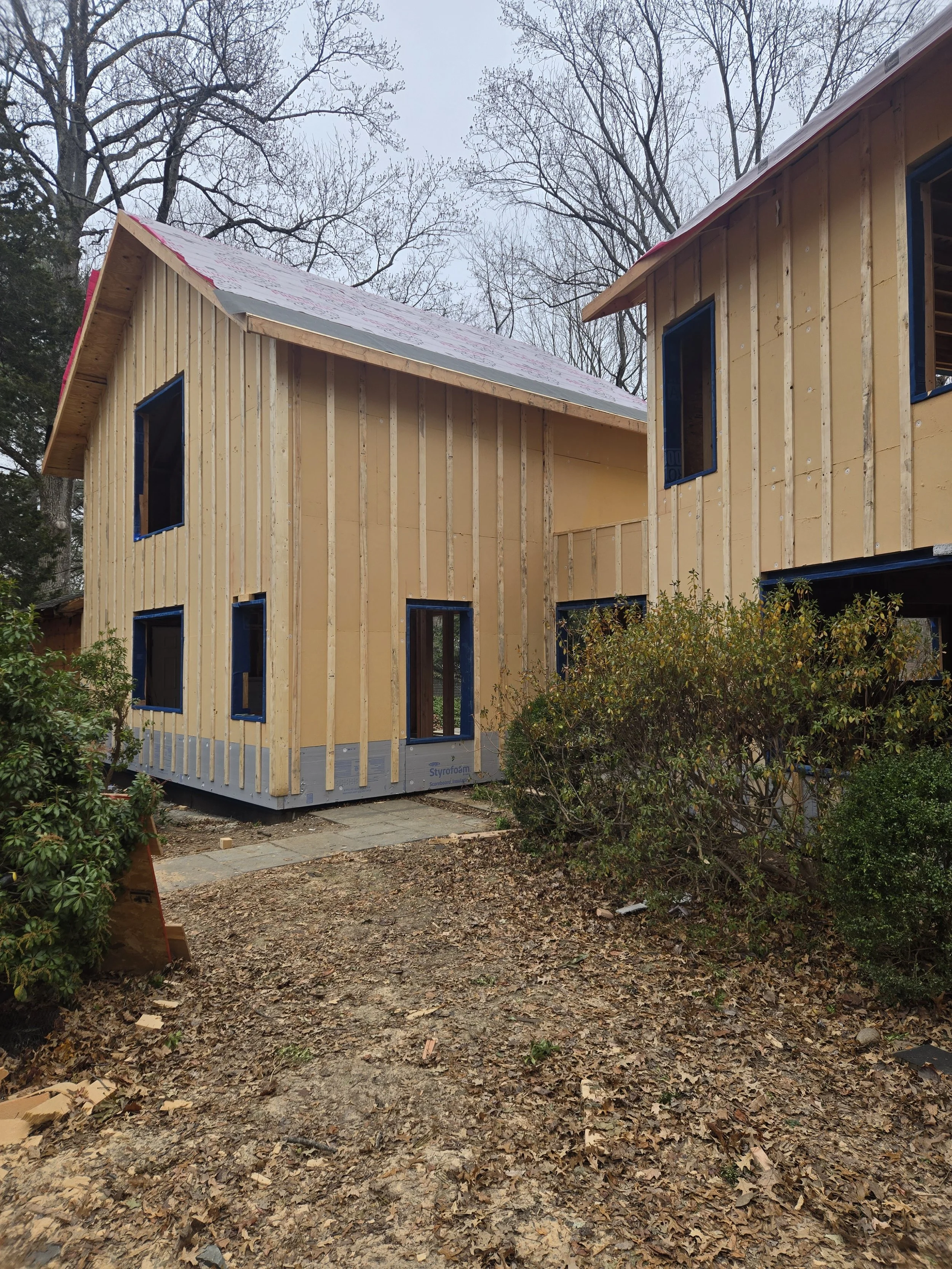
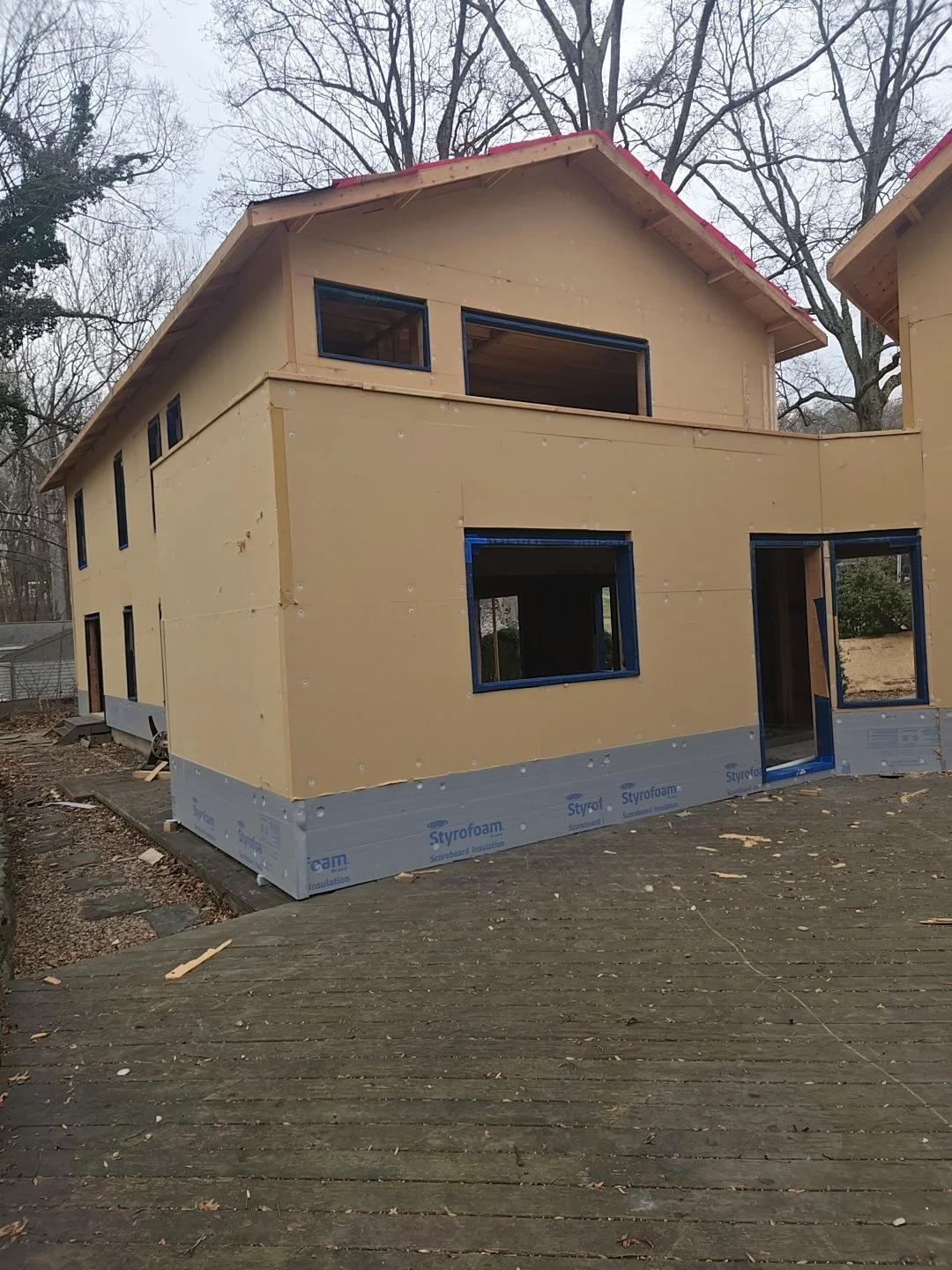
A former single-story garage addition is expanded vertically and rebuilt as part of a unified enclosure and massing strategy. From existing conditions through framing and weather barrier to continuous exterior insulation and rainscreen preparation, the sequence above documents how the addition is consolidated into a legible, fully integrated volume within the overall house.
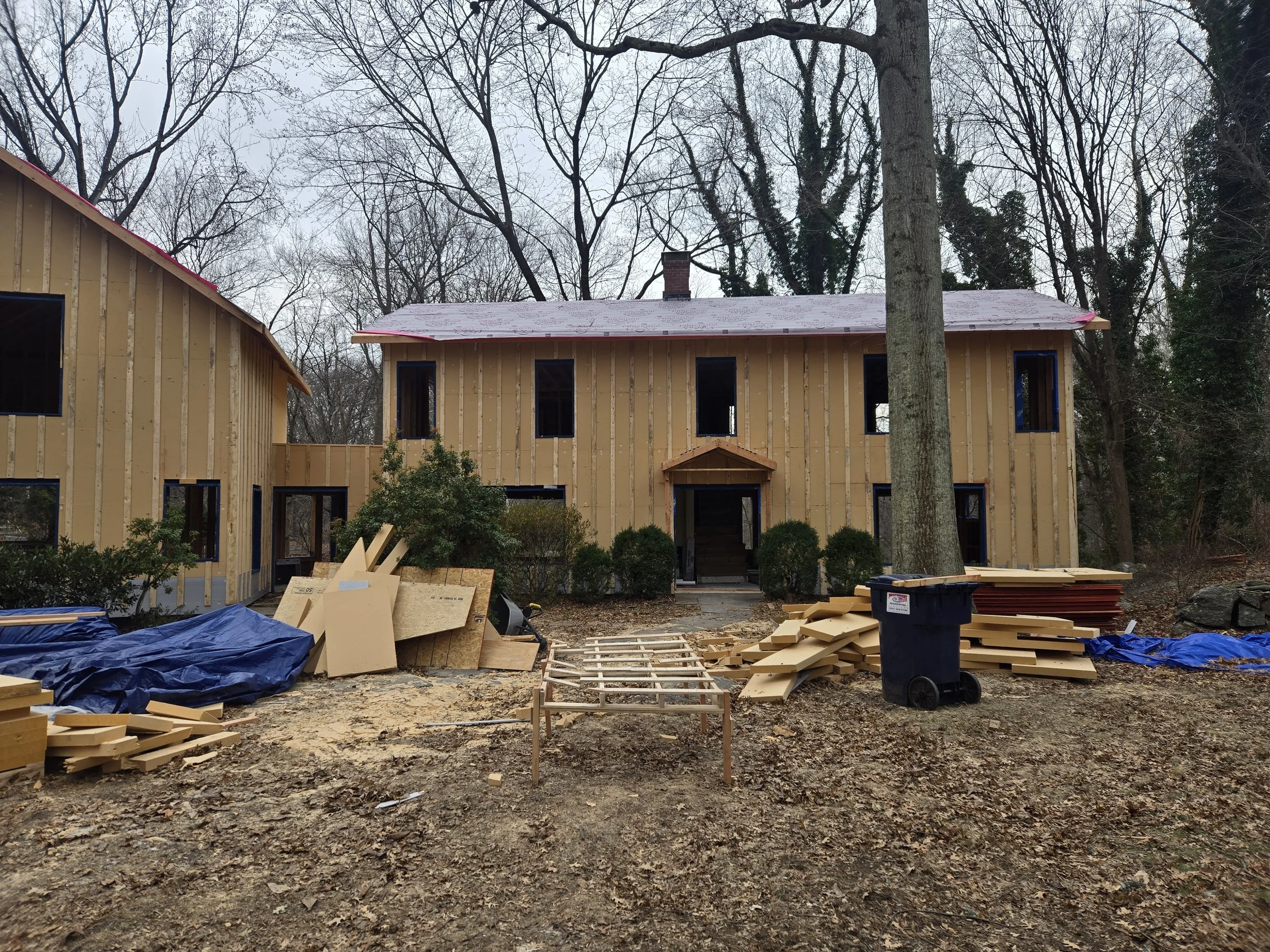
Front elevation during construction, showing the proportion of the vertical enlargement as the new volume begins to rebalance the facade and clarify the overall composition of the house.
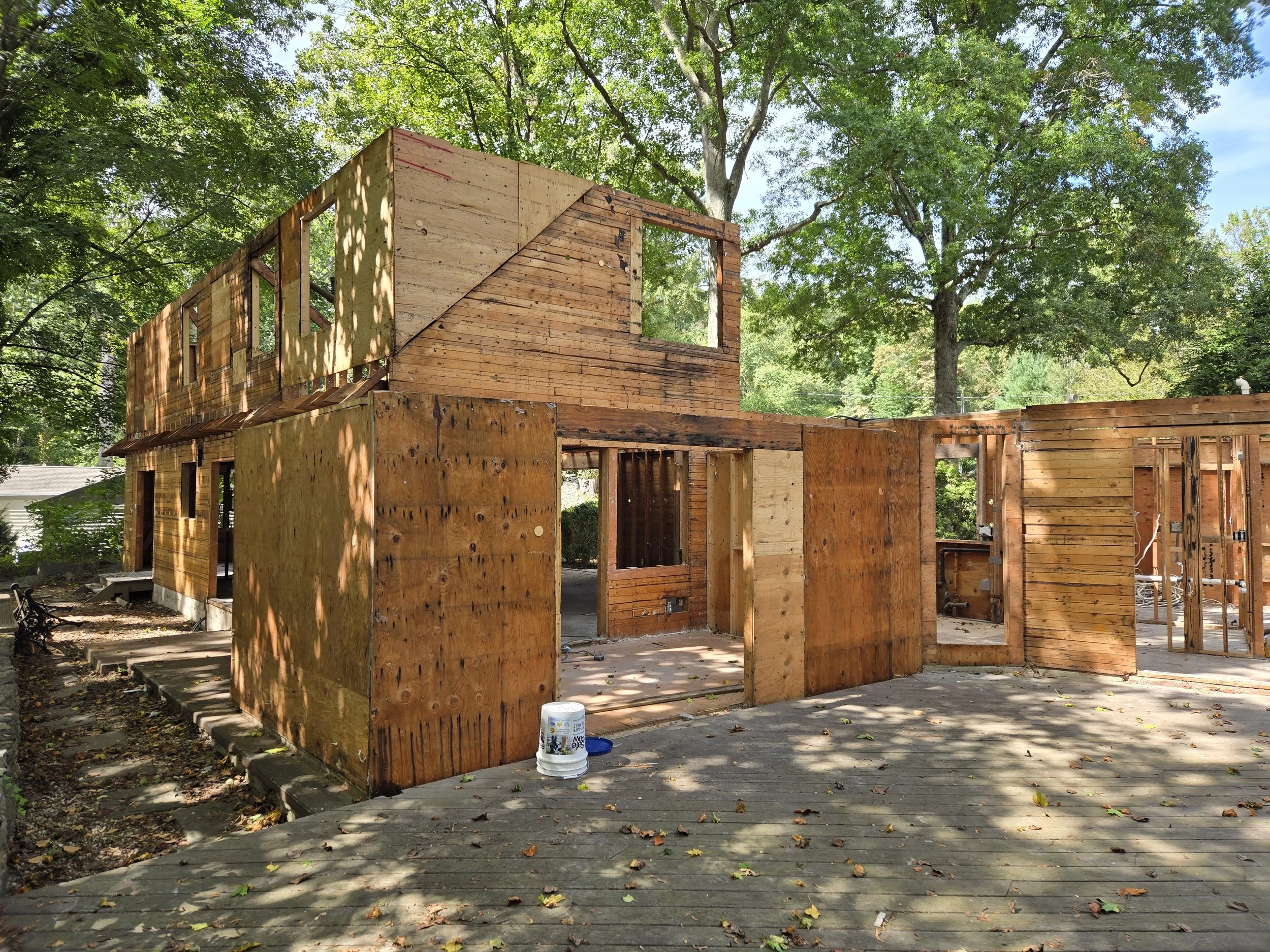
Rear of the house during demolition and reconstruction, showing the removal of prior additions and the introduction of a simplified connector volume. Continuous exterior insulation is applied to clarify the relationship between the existing house and the new enlargement.
Enclosure Detailing
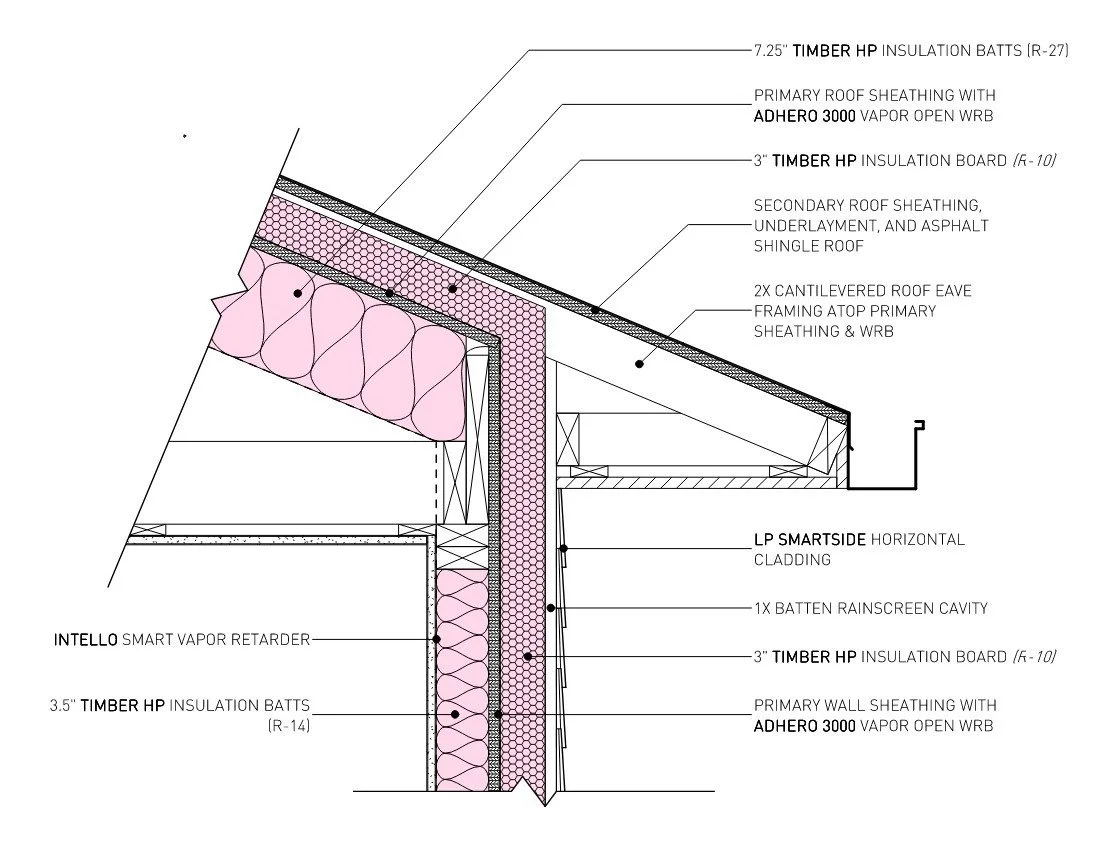
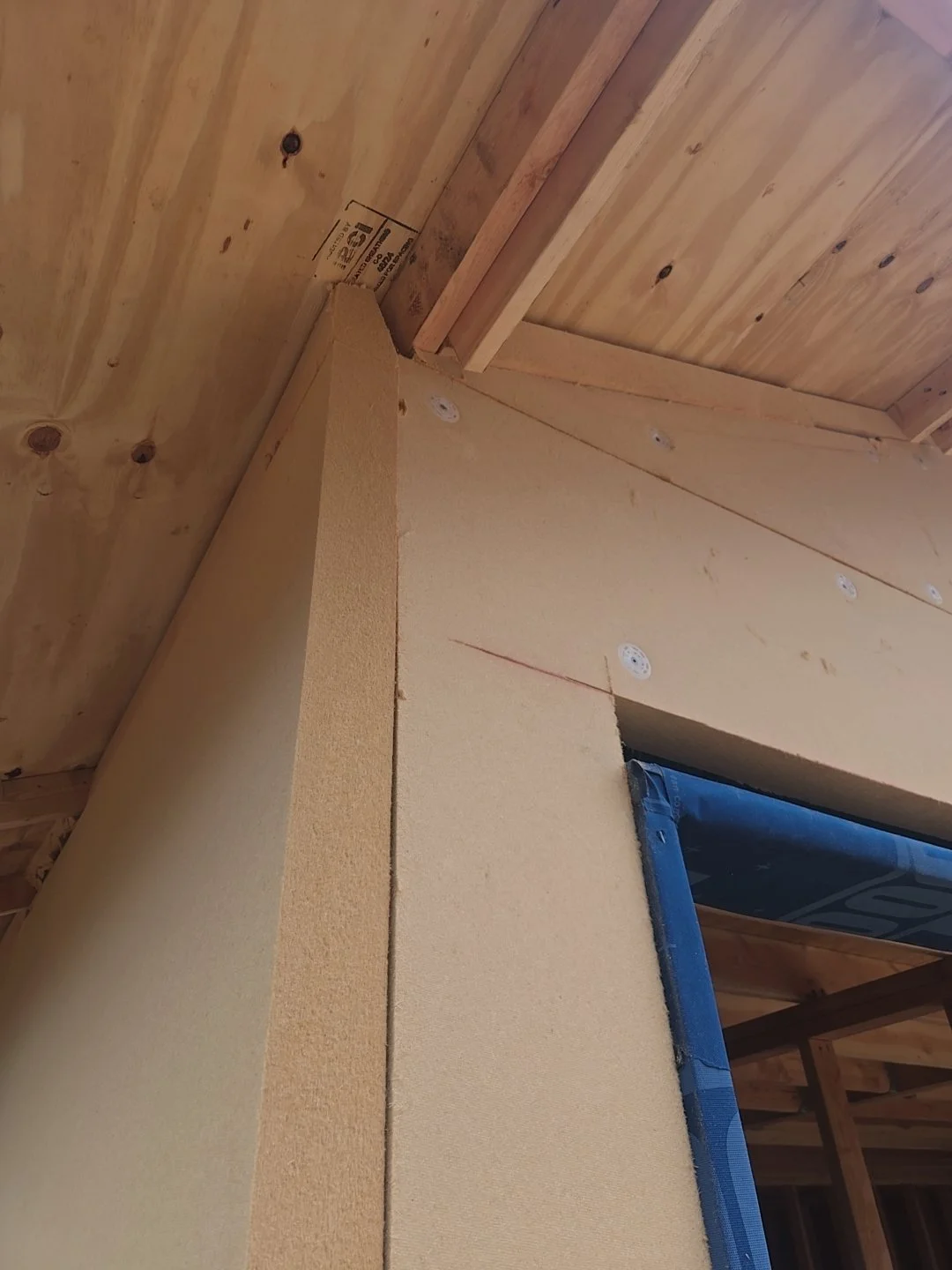
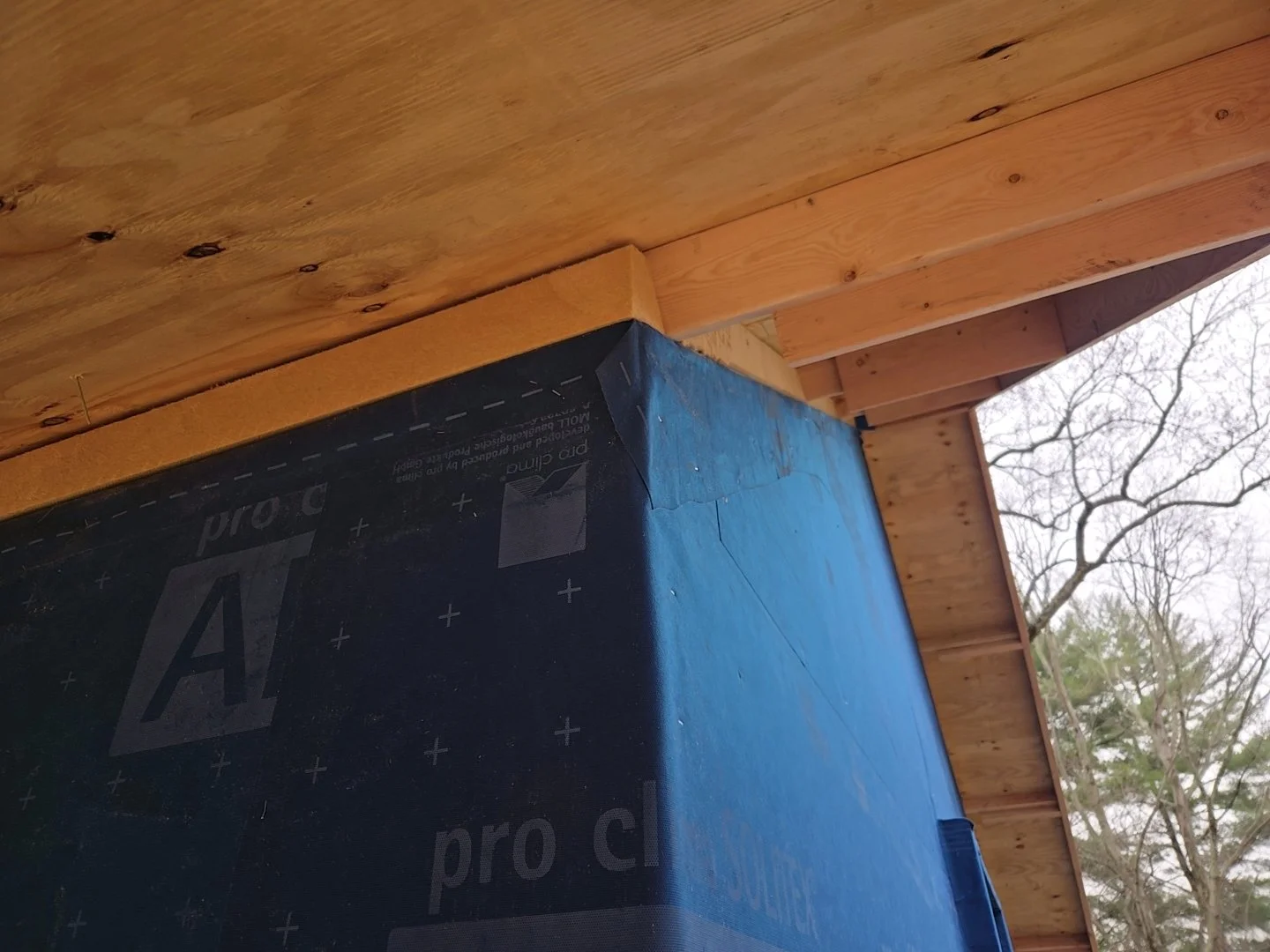
Wall and roof enclosure detailing during construction, showing the alignment of weather-resistive barriers and continuous exterior insulation across assemblies. By carrying the exterior insulation from wall to roof and carefully coordinating transitions, the enclosure is treated as a continuous jacket around the building, minimizing thermal bridging and reinforcing a clear, legible construction logic.